Showing posts with label Traditions. Show all posts

Sep 9, 2012

Indonesians feed 'hungry ghosts'

Chinese Indonesians throw fake money to honor their ancestors during the Hungry Ghost Festival in Medan, North Sumatra, Aug. 31. During the festival, Chinese perform ritual prayers so that the spirit-soul of their ancestors will go to heaven. According to tradition, ghosts and spirits are believed to come out from hell to visit earth during the seventh month in the Chinese lunar calendar called the Ghost Month.
The Ghost Festival, also known as the Hungry Ghost Festival, or Yu Lan is a traditional Chinese festival and holiday celebrated by Chinese in many countries.

Jun 27, 2012

Ajvatovica

Ajvatovica is the largest Islamic traditional, religious and cultural event in Europe. Muslims from around the world gathered here, as it is the most important Islamic shrine in Bosnia and Herzegovina. It was named after Ajvaz-dedo who was a devout Muslim.
Every year in June, thousands of Muslims gather at the holy site at Ajvatovica near the village of Prusac. According to legend, Prusac had problems with water supply.
Ajvaz-dedo found a water spring near Prusac, but it was blocked with a 74 meters long rock. Ajvaz-dedo spent 40 days praying to Allah to split the rock. On the fortieth morning ... read more
More pictures: 1, 2

Apr 4, 2012

Sizdah Bedar

Sizdah BedarSizdah is the Persian term for thirteen. The 13th day of the first month of the Iranian New Year is called Sizdah Be-dar and Nature Day. On this day marking the end of the New Year holidays, people prepare a large picnic and stay outdoors to enjoy a day of sports and fun with friends and relatives.
On Sizdah Bedar, many big cities in Iran look empty and unpopulated.
At the end of their picnics people throw away the green sprouts, known as Sabzeh (from the traditional Haft Seen table that they prepared for the first day of New Year).
More pictures: 1, 2, 3

Apr 3, 2012

Nowruz World Festival

Nowruz World FestivalMore pictures: 1, 2, 3, 4, 5, 6, 7, 8, 9

Nowruz in Afghanistan

Nowruz in AfghanistanNowruz is celebrated for two weeks throughout Afghanistan. People wear new clothes, refurbish their house, paint the buildings and henna their hands.
During the first three days of the year, families and relatives meet and visit each other’s houses.
One of most famous of Nowruz traditions among Afghans is cooking Samanu (or samanak). Samanu is a special type of sweet dish made from Wheat germ. Women take a special party for it during the night, and cook it from late in the evening till the daylight, singing a special song: Samanak dar Josh o ma Kafcha zanem - Degaran dar Khwab o ma Dafcha zanem.
One of the most significant symbolic traditions of Nowruz in Afghanistan is Haft Mewa, or “Seven Fruits.” (Haft Sin, or seven “S,” is a similar tradition common in Iran.) The “seven fruits” table starts with seven dried fruits: raisins, senjed (the dried fruit of the oleaster tree), pistachios, hazelnuts, prunes (dry fruit of apricot), walnuts and either almond or another species of plum fruit. Haft Mewa is like a fruit salad, served in the fruits’ syrup.
Along with other customs and celebrations, normally a Buzkashi tournament is held. The Buzkashi matches take place in northern cities of Afghanistan and in Kabul.
This year, all Afghans are hoping to start a good year with changes and improvement in security issues.
More pictures:1, 2

Oct 16, 2011

Pakistan's decorated buses

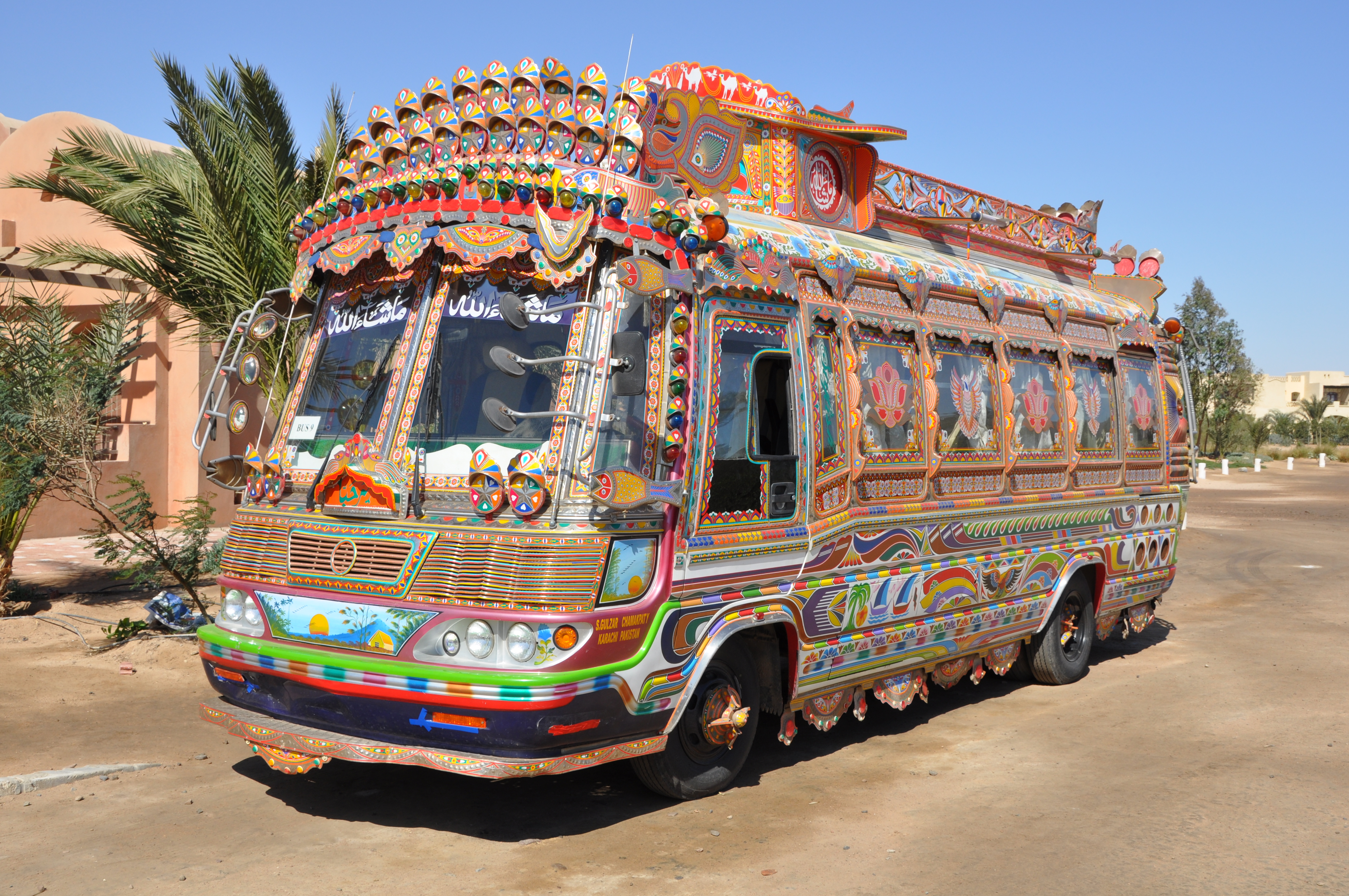
Pakistan's decorated busesMany trucks and buses in Pakistan are highly customized and decorated by their owners. These adorned vehicles are considered as moving art, or jingle art. Because of their unique decor style, these vehicles are quite distinct in layout from other trucks around the world. Each part of the vehicle is decorated differently, with variations depending on the regional style. The decorative process is usually very expensive.
More pics

Aug 6, 2011

Iftar time

Iftar time, pakistan, ramadanPakistani Muslims prepare food for ‘Iftar’, a time to break the fast, at a mosque during the Muslim holy fasting month of Ramadan, in Lahore, Pakistan. During Ramadan, the holiest month in Islamic calendar, Muslims refrain from eating, drinking, smoking and sex from dawn to dusk.
27 Beautiful Photos of Ramadan Around the World

Apr 19, 2011

Hijama

HijamaHijama is an Arabic name for wet cupping, where blood is drawn by vacuum from small skin incisions for therapeutic purposes. It's generally performed by Muslims as it is a form of medicine specifically mentioned and encouraged by the Islamic prophet Muhammad.
Hijama can be performed anywhere on the body, often at the site of an ache or pain in order to ease or alleviate it.
The pictures are taken in a clinic in Tehran.
More pics: 1, 2, 3, 4

Apr 11, 2011

Nowruz in Tajikistan

Nowruz in Tajikistan
Nowruz, is the name of the New Year in Iranian calendars and the corresponding traditional celebrations. Nowruz is also widely referred to as the Persian New Year.
Nowruz is celebrated and observed by Iranic peoples and the related cultural continent and has spread in many other parts of the world, including parts of Central Asia, Caucasus, South Asia, Northwestern China, the Crimea and some groups in the Balkans.
Tajikistan and Iran have common language and lecture, one of them is Nowruz. Tajikistan people celebrate Nowruz in first day of year.
Nowruz marks the first day of spring and the beginning of the year in Iranian calendar. It is celebrated on the day of the astronomical vernal equinox, which usually occurs on March 21 or the previous/following day depending on where it is observed.
The UN's General Assembly in 2010 recognized the International Day of Nowruz, describing it a spring festival of Persian origin which has been celebrated for over 3,000 years.
More pic: 1, 2

Apr 5, 2011

Haft-Sin

HaftsinExcuse me for my long late. I want update my blog after three weeks. We were in vacation through our new year; our new year is named Nowruz. Today post is about Haftsin.
Haftsin or the seven 'S's is a traditional table setting of Nowruz, the traditional Iranian spring celebration. Today the haft sin table includes seven specific items, all starting with the sin (س) in the Persian alphabet. The items symbolically correspond to seven creations and holy immortals protecting them.
Traditionally, families attempt to set the most aesthetically appealing Haft Sîn table they can as an expression of traditional, spiritual, and social value, for visitors during Nowruz visitations. The Haft Sin items are:
1.Sabzeh: wheat, barley, mung bean or lentil sprouts growing in a dish - symbolising rebirth
2.Samanu: sweet pudding made from wheat germ - symbolising affluence
3.Senjed: dried oleaster fruit - symbolising love
4.Sir: garlic - symbolising medicine
5.Sib: apples - symbolising beauty and health
6.Somaq: sumac fruit - symbolising (the color of) sunrise
7.Serkeh: vinegar - symbolising old-age and patience
A slightly less traditional Haft Sin may also include:
Sonbol: the fragrant hyacinth flower - symbolising the coming of spring
Sekkeh: coins - symbolising prosperity
Ajil: dried nuts, berries and raisins
a mirror
decorated eggs, sometimes one for each member of the family symbolising fertility
a bowl with goldfish symbolising life, and the constellation of Pisces which the Sun is leaving
rose water, used to cleanse in Islam before prayer and is also heavily prevalent in Iranian cuisine
You look our Haftsin and me in the picture ;)

Dec 12, 2010

to commemorate Ali-Asghar

to commemorate Ali-AsgharIranian women gathered their newborns to commemorate Ali-Asghar, the newborn son of Imam Hussein (AS).
The six-month-old baby Ali-Asghar was killed by an arrow that hit his throat while he was in his father’s arms on Ashura (the tenth of Muharram), which was the day Imam Hussein (AS) and his companions were martyred.
For the followers of the Ahlul Bayt (as), the first two months of the Islamic year are a time for grief and mourning. It was on the 10th of Muharram, 61 A.H/680 C.E that Imam Husayn (as) the grandson of the Holy Prophet (saw) was martyred in Karbala, "Ashura", meaning the tenth day. The Holy Imam went through great difficulties even after Ashura, and their grief and pain is remembered by their followers for two months. During these two months Shia"s try to avoid all forms of merry making. They are as one bereaved family, giving vent to their grief and sorrow through mourning rituals such as Majalis and Matam. This does not mean however that they make their lives miserable. Read more ...
more pics: 1, 2, 3, 4, 5, 6

Sep 29, 2010

Ramadan's cannon in Egypt

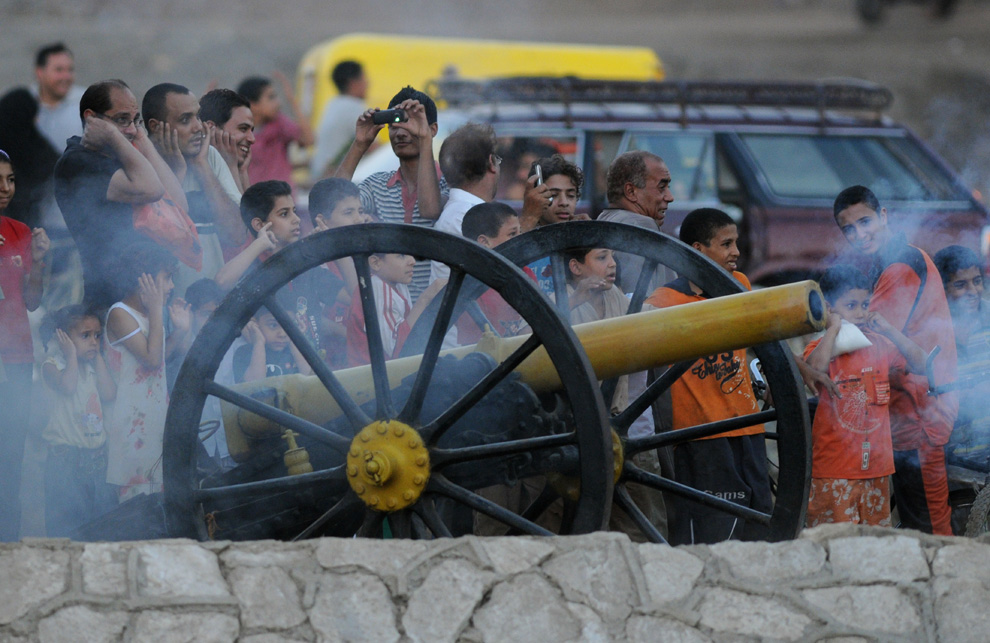
Ramadan's Cannon in EgyptRamadan's Cannon is an old Egyptian tradition, where it announces the end of a day of Ramadan's fasting on August 15th, 2010, in El-Mahalla El-Kubra, Egypt. (© Mohamed Hossam Eldin)